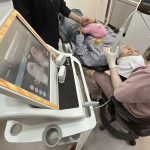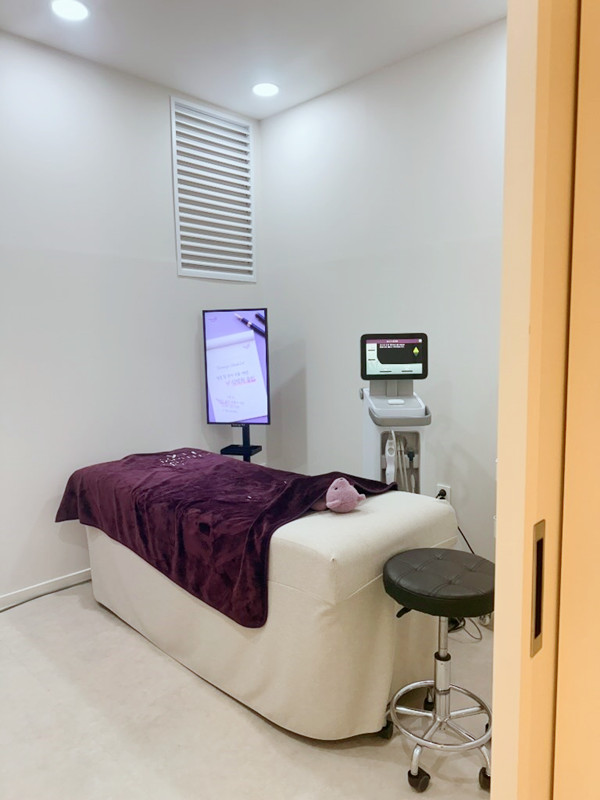
In recent years, HIFU and radiofrequency (RF) lifting in Busan have become almost synonymous with the idea of a “must-do” treatment abroad. Yet with the same procedure, some people genuinely come back with a sharper jawline, while others spend a full budget and feel “nothing really changed”—or end up dealing with redness, swelling, and even burns. The difference usually isn’t the treatment itself. It’s the details nobody warns you about before you go.
The five traps below are drawn from publicly shared reviews and real cases. They are the most commonly overlooked—and the most likely to cause problems.
Trap 1: Deciding Based Only on “Price Per Shot”
Two treatments both labeled “HIFU, 300 shots” can range from roughly NT$3,000 to NT$22,000. The reason is the device itself: American systems deliver denser energy at a higher cost, while locally manufactured systems are positioned for affordability. They were never on the same comparison baseline to begin with.
· What goes wrong: You think you found a bargain, but you actually bought a treatment in a completely different energy class
· What to do instead: Confirm the device name and the cartridge model first, then compare prices—and ask exactly which areas those 300 shots will cover
Trap 2: Not Distinguishing Authorized Devices from Recycled Cartridges
This is the most concrete trap of all. Original cartridges carry usage limits and expiration windows, so their cost cannot be driven down. Any quote that is clearly below the market rate for the same device warrants reasonable suspicion about where the cartridge came from.
· What goes wrong: Energy output becomes inconsistent—at best the treatment does nothing, at worst the surface skin is burned and blisters form
· What to do instead: Ask to see the manufacturer markings on both the device and the cartridge, and verify whether the clinic is an authorized partner
Trap 3: Confusing HIFU with RF and Targeting the Wrong Layer
HIFU acts on the deep SMAS layer and primarily addresses sagging. RF heats the dermis with broad volumetric energy and primarily addresses looseness, thinness, and fine lines. Pick the wrong direction and results simply will not appear.
· What goes wrong: Your laxity is the sagging type, but you only had RF—so of course your contour line does not move
· What to do instead: Ask the doctor to perform a pinch test on site to determine which type of laxity you have before deciding on the device and shot count
Trap 4: A Language Barrier, and the Treatment Changes at the Last Minute
You believe you agreed on Treatment A during the consultation, but the dosage, shot count, or product brand is quietly adjusted during the procedure. This happens most easily when there is no shared language.
· What goes wrong: You pay the same amount, but what goes into your skin is not what was discussed
· What to do instead: Choose a clinic with resident interpreters, and verify the packaging and dosage on the spot before the treatment begins
Trap 5: No One to Contact After the Procedure
Redness, dryness, itching, or a localized lump appears after you return home—and the person who coordinated your visit is no longer reachable. It is the most common helpless scenario in medical tourism.
· What goes wrong: A minor issue drags on until it requires a second corrective procedure
· What to do instead: Before departure, confirm the clinic offers an online follow-up channel and save its official contact account
Two Anonymized Cases
Case A: A budget-conscious visitor compared quotes and chose the lowest-priced HIFU treatment. During the session she felt it “didn’t really register,” and three months later her contour line showed no change. Only afterward did she learn she had purchased a device with lower energy settings—effectively spending her budget on a treatment that meant nothing.
Case B: Another visitor agreed on a skin booster treatment using genuine products in full dosage during the consultation, but did not verify the packaging before the procedure. After returning home, she felt the results faded noticeably sooner than expected. She later learned that some clinics swap in lower-cost products when patients are not paying attention.
What both cases share is this: the problem was not that “the treatment was bad.” It was that a few verification steps were skipped before departure.
Common Pitfalls at a Glance
| Common Mistake | Risk | Correct Approach |
|---|---|---|
| Comparing per-shot price only | Buying a lower energy class | Confirm device and cartridge first |
| Not asking about device origin | Possibly recycled cartridges | Ask for manufacturer markings |
| Wrong modality, wrong layer | Results close to zero | Pinch test to classify laxity |
| Not verifying the procedure | Dosage or brand swapped | Check packaging before treatment |
| No post-care contact channel | No help after returning home | Confirm online follow-up exists |
Pre-Departure Checklist
✗ Booking immediately because the price is unusually low, without asking about the device or the doctor
✓ Confirm the clinic uses authorized devices and is willing to show proof
✗ Looking only at price, without checking whether pricing is published and applies equally to everyone
✓ Choose a clinic with transparent pricing and no domestic/foreign price gap
✗ Nodding along during the consultation even when you don’t understand, too embarrassed to ask more
✓ Choose a clinic with resident interpreters or a Chinese-speaking coordinator, and ask until it is clear
✗ Not verifying packaging and dosage before the procedure
✓ Check the product brand, volume, and shot count on the spot
✗ Leaving without a contact channel for aftercare
✓ Join the official account before you go, and confirm follow-up and inquiry channels
Legal Protection for International Patients
For medical disputes involving foreign patients, Busan relies mainly on the clinic’s own customer service mechanisms and the complaint procedures of the national Medical Dispute Mediation and Arbitration Agency. Cross-border claims are relatively cumbersome and time-consuming. In practice, choosing the right clinic beforehand is always more effective than pursuing a remedy afterward. That is why the verification steps above are worth an extra ten minutes.
Frequently Asked Questions
Q1: Should I avoid any treatment that is priced low?
Not necessarily. Locally manufactured devices genuinely cost less, so affordable pricing is reasonable. What deserves scrutiny is a quote clearly below the market rate for the same device.
Q2: Can HIFU and RF be done together?
Yes. They act on different layers and are often combined. However, the sequence and interval should be determined by a physician—do not stack them on your own.
Q3: How can I verify a device is authorized?
Ask to see the manufacturer markings on the device and cartridge, and confirm whether the clinic is an authorized partner. Some chains also publish their equipment procurement information, which can serve as a reference.
Q4: Is a higher shot count always better?
No. Shot count should match your facial structure, degree of laxity, and budget. Excessive stacking actually increases the risk of burns.
Q5: What if I feel unwell after returning home?
Contact the clinic’s online consultation channel first, and see a local dermatologist for assessment. Keep your treatment receipts and records.
Final Thoughts
Doing your homework protects your results better than spending more money. When choosing a clinic, get clear answers on four things: transparent pricing, verifiable equipment, proper interpretation, and a responsive aftercare channel. Do that, and the odds of a bad experience drop sharply. Consult a qualified physician before any treatment; the actual plan should be based on an in-person assessment.
This article is compiled from publicly available information and is for reference only. Results vary by individual, and all treatments carry risk. Please understand the details fully and discuss them with a physician beforehand.