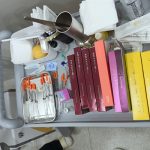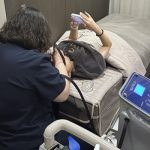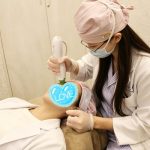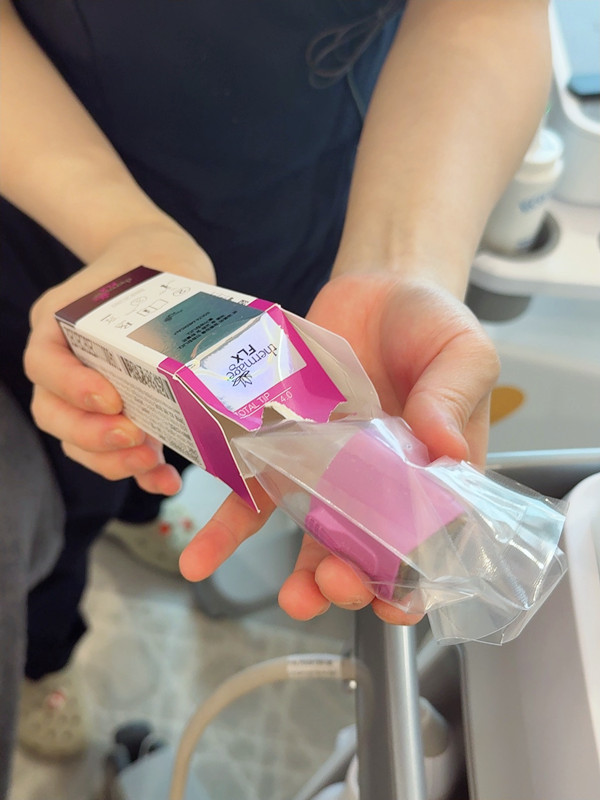
Among the countless facial tightening treatments in Korea, Thermage consistently sparks the highest discussion volume. However, with messy online information—such as the differences between FLX and CPT, doing it in Korea versus Taiwan, and whether it’s truly worth flying over for—clinic websites often leave these questions unanswered. This review breaks down Thermage’s technical principles, real efficacy data, risk assessment, and cost-effectiveness using hard data to help you rationally decide if it suits you.
▎Technical Principle Breakdown: What Does Thermage Actually Do?
Thermage’s core technology is Monopolar Radiofrequency. The principle uses radiofrequency energy to create deep heating in the dermis and subcutaneous tissue, reaching temperatures of about 65°C to 75°C. This causes the triple-helix structure of collagen to denature and contract, while simultaneously stimulating new collagen proliferation.
The biggest difference from other energy-based devices lies in its depth of action. Thermage can heat down to 4.3 mm subcutaneously, covering the entire dermis to shallow subcutaneous fat. While ultrasound devices (like Ultraformer/Ulthera) reach deeper into the SMAS fascia layer, their focal points are focused, covering a smaller area. Thermage’s advantage is area heating (“sheet heating”), uniformly heating entire regions, making it ideal for comprehensive skin tightening.
Two main generations of devices exist on the market:
Thermage CPT (Comfort Pulse Technology): The 3rd generation, combining vibrating cooling technology to reduce pain, with a fixed shot count of 900 or 1,200 shots. Still offered at some Korean clinics at lower prices.
Thermage FLX (4th generation): Launched in 2017, shot count is optimized to 600 shots, but energy coverage per shot is larger, shortening overall treatment time to about 45 minutes. It adds “AccuREP” technology, which automatically detects tissue impedance per shot and adjusts energy output for more uniform heating.
Technical Parameter Comparison
| Specification | CPT (3rd Gen) | FLX (4th Gen) |
| Energy Type | Monopolar RF | Monopolar RF |
| Shot Count | 900 / 1,200 shots | 600 shots |
| Coverage per Shot | 1 $cm^2$ | 3 $cm^2$ |
| Treatment Time | 60–90 mins | 30–45 mins |
| Cooling Tech | Vibrating Cooling | Vibrating Cooling + AccuREP |
| Pain Level (1-10) | 6–7 | 4–5 |
| Energy Uniformity | Medium | High (Auto-detects impedance) |
| Korea Market Share | Gradually decreasing | Mainstream |
▎Multi-Option Comparison Matrix: Thermage vs. Ultrasound (Ulthera) vs. Thermage FLX/Solta options (or equivalent premium RF)
Note: Compared alongside Ultrasound (Ulthera) and premium RF options.
| Evaluation Dimension | Thermage FLX | Ultrasound (Ulthera) | Premium RF (e.g., Sofwave/Other) |
| Target Layer | Dermis to 4.3mm sub-Q | SMAS Fascia (4.5mm) | Dermis (3mm) |
| Coverage Method | Area uniform heating | Point-focused | Area heating |
| Immediate Tightening | Medium | Weak | Medium |
| Peak Efficacy Time | 2–3 months | 2–3 months | 3–4 months |
| Duration | 1–2 years | 1–1.5 years | 1–2 years |
| Pain Level (1-10) | 4–5 | 6–8 | 5–7 |
| Single Cost (Korea) | ₩1.5–2.5M | ₩800K–2M | ₩2–3.5M |
| Applicable Areas | Full face + eyes + body | Full face + body | Full face + neck |
| Comprehensive Score | ★★★★☆ | ★★★★☆ | ★★★★☆ |
Weighted Scoring Analysis (Max 10 points)
| Evaluation Item | Weight | Thermage FLX | Ultrasound | Premium RF |
| Efficacy Significance | 25% | 8 | 7 | 8 |
| Pain/Comfort | 20% | 7 | 5 | 6 |
| Recovery Speed | 15% | 9 | 9 | 9 |
| Cost-Effectiveness | 15% | 7 | 8 | 6 |
| Durability | 15% | 8 | 7 | 8 |
| Safety | 10% | 8 | 8 | 8 |
| Weighted Total | — | 7.70 | 7.15 | 7.20 |
From the weighted scores, Thermage FLX balances comfort and efficacy best, offering the highest overall cost-effectiveness. Ultrasound excels in lower pricing and deeper reach, but has higher pain.
▎Applicable Scenario Decision Tree
Concern: “Mild full-face sagging + large pores” $\rightarrow$ Prioritize Thermage FLX
Sufficient budget $\rightarrow$ Thermage FLX Full Face (600 shots)
Limited budget $\rightarrow$ Thermage CPT (900 shots, older model but still effective)
Concern: “Obvious sagging jawline + double chin” $\rightarrow$ Prioritize Ultrasound
Pain-averse $\rightarrow$ Consider Thermage FLX + localized ultrasound combo
Pain-tolerant $\rightarrow$ Ultrasound focused intensely on the jawline
Concern: “Eye wrinkles + laugh lines” $\rightarrow$ Prioritize Thermage FLX Eye Tip
Sufficient budget $\rightarrow$ Premium eye + full face RF
Limited budget $\rightarrow$ Thermage FLX Eye Tip (450 shots)
Concern: “Comprehensive aging + unlimited budget” $\rightarrow$ Premium RF full face + Thermage FLX localized reinforcement.
Key Decision Logic: Thermage’s core advantage is uniform area heating, making it ideal for overall tightening. If your issue is localized severe sagging, point-focused ultrasound fits better.
▎Korea vs. Taiwan Cost-Benefit Analysis
Thermage FLX Full Face (600 shots) Cost Comparison:
Korean Clinics (Gangnam): ₩1.5–2.5M (~35,000–60,000 TWD)
Korean Clinics (Myeongdong): ₩1.2–2M (~28,000–48,000 TWD)
Taiwan Clinics: 60,000–120,000 TWD (depending on clinic tier)
While Korea looks much cheaper, additional trip costs apply:
Round-trip flight: ~10,000–15,000 TWD
2 nights accommodation: ~3,000–5,000 TWD
Transportation misc: ~2,000 TWD
Translation service: Free at some clinics, ₩50K–100K at others.
Total trip cost in Korea is around 45,000–80,000 TWD, comparable to mid-to-low tier clinics in Taiwan. However, Korea’s advantages lie in:
Extensive doctor experience (Thermage case volume in Korea far exceeds Taiwan).
Dual-machine choices at some clinics (CPT and FLX).
Bundling with other procedures to dilute travel costs.
Cost-Effectiveness Conclusion: If you only do a single Thermage procedure, flying to Korea offers ordinary value. But if bundled with other treatments (e.g., injections, skin management), overall CP value increases significantly.
▎Risk Coefficient Comparison
| Risk Type | Thermage FLX | Ultrasound | Premium RF |
| Burn Risk | Low | Low | Low |
| Nerve Damage Risk | Extremely Low | Extremely Low | Extremely Low |
| Infection Risk | None | None | None |
| Uneven Efficacy Risk | Low | Medium | Low |
| Post-Op Recovery Risk | Extremely Low | Extremely Low | Extremely Low |
| Allergy Risk | None | None | Low (conductive gel) |
Thermage’s overall risk coefficient is very low due to its non-invasive nature, and AccuREP tech significantly reduces energy unevenness. The main risk to watch out for is uneven energy distribution caused by inexperienced operators, which can lead to unremarkable results in certain areas.
▎Real Evaluation Data References
Based on Korean medical aesthetic industry stats and clinical literature:
Patient satisfaction for Thermage FLX ranges between 80% to 85%, higher than CPT’s 75%.
Collagen proliferation rate at 3 months post-treatment increases by roughly 20% to 30%.
About 60% of patients still observe continuous improvement at 6 months.
Duration median is roughly 14 to 18 months.
About 5% to 8% of patients report unnoticeable results, likely linked to individual collagen metabolism differences.
▎Buying Recommendations Summary
Choose FLX, not CPT. FLX’s AccuREP tech and shorter treatment time are substantial upgrades worth the price gap. If a clinic only offers CPT without significant pricing advantages, switch to an FLX clinic.
Korea’s core value isn’t saving money, it’s doctor experience. High operational volume in Korea gives doctors more precise judgment on energy distribution. If you just want to save money, mid-tier Taiwan clinics offer decent value too.
Best demographic: 30–50 years old, mild-to-moderate skin laxity, seeking comprehensive firming. For severe sagging or bone structure issues, Thermage has limited utility and more invasive options are needed.
▎FAQ
Q: Do Thermage FLX and CPT differ significantly in results?
The core mechanism is identical (RF heating collagen). The differences lie in FLX’s more uniform energy distribution, lower pain, and shorter time. Clinical data shows slightly higher FLX satisfaction, but the gap isn’t massive.
Q: How many times a year should I get Thermage?
Standard recommendation is once a year. Some doctors recommend a touch-up 6 months after the first treatment, followed by annual maintenance. Specific frequency should be evaluated by a physician.
Q: Can Thermage and Ultrasound be done together?
Yes, and increasingly recommended by Korean clinics. Thermage handles sheet tightening, while ultrasound handles regional fascial lifting; they complement each other. Leave at least a two-week interval between them.
Q: How to confirm an authentic machine when getting Thermage in Korea?
Request to check the Thermage original manufacturer logo and serial number on the device; reputable clinics display this proactively. FLX exterior differs clearly from CPT; check official images pre-trip.
Q: Will Thermage cause hollow cheeks post-treatment?
A minority of people experience mild hollowing in the temples or cheeks, usually caused by excessive energy concentration in low-fat areas. Choosing an experienced doctor prevents this.
▎Conclusion
Thermage FLX holds the highest comprehensive score in facial firming, balancing efficacy, comfort, and duration. The core value of flying to Korea lies in physician experience and multi-treatment synergy rather than sheer savings. Actual results vary by individual; professional medical evaluation after a face-to-face consultation is recommended.