Why I Decided to Get Anti-Wrinkle Injections in Korea
After celebrating my birthday earlier this year and blowing out the candles, I looked closely at a group photo for the first time. Forehead wrinkles, glabella lines (frown lines), and those extra-prominent fine lines around the outer corners of my eyes when smiling—oh no, when did these appear?
To be honest, my previous attitude toward medical aesthetics was always “let’s wait and see”; I felt I wasn’t at that stage yet. But cameras don’t lie. Those lines were right there on my face, and the more concealer I piled on, the worse the creasing got. A friend in Taipei had done anti-wrinkle injections with decent results, but the duration was a bit short, and she mentioned it wasn’t cheap. That’s when I seriously started looking into flying to Seoul for anti-wrinkle injections.
The Research Process: From Clueless to Clear
Initially, I searched online and found the information extremely scattered. Some recommended botulinum toxin, others pushed various newly emerging Korean brands like Meditoxin, Botulax, and Nabota—just the brand names made my head spin. Eventually, I figured out that the core principle of Korean anti-wrinkle injections is botulinum toxin injection, with differences lying in the brand, diffusion range, and longevity.
I spent about two weeks organizing my research, focusing on three key questions: First, how do Korean anti-wrinkle injections differ from those in Taipei? Second, which clinics have more stable reputations for anti-wrinkle injections? Third, including flights and accommodation, is the whole trip actually cost-effective?
The conclusion: Korea offers a wider selection of anti-wrinkle injection brands, unit prices are 30% to 40% lower than in Taipei, and Korean doctors generally handle high injection volumes, giving them an edge in touch and precision. Plus, since I already wanted to go to Seoul for shopping and food, I treated it as a bonus aesthetic maintenance trip.
Choosing a Clinic: Comparing Three and Settling on One
I checked several medical aesthetic clinics in Seoul online and sent photos via online consultation for price estimates. The first quote was high, but they were famous; the second quote was so cheap it made me suspicious (“Is this price reasonable?”); the third was recommended by a friend—the head director conducted the in-person consultation, the price fell in the middle, customer service replied quickly, and the translator was fluent.
I ultimately chose the third one. The key reason wasn’t the lowest price, but that during the consultation, the doctor analyzed my muscle movement patterns rather than just asking right away, “Where do you want injections?” He explained that forehead wrinkles are caused by excessive frontalis muscle contraction, while glabella lines relate to the corrugator supercilii muscle; treating only surface lines would yield unnatural results. This “find the cause before treatment” attitude made me feel much more secure.
Pre-Departure Preparation Checklist
After making my decision, I spent about a week preparing:
Booked the consultation time and confirmed treatment-day procedures.
Compiled skin condition photos from the past three months for easy comparison by the doctor.
Stopped using skincare products containing retinol one week prior to prevent skin sensitivity.
Stopped taking supplements (fish oil, Vitamin E, etc.) three days prior to reduce bruising risks.
Prepared fever reducers, painkillers, and ice packs just in case.
Actually, the pre-treatment prep isn’t overly complicated, but small details like avoiding alcohol beforehand can easily slip your mind—I almost forgot about that one myself.
Treatment Day: From Walking In to Finishing in 40 Minutes
My first impression of the clinic was a clean, bright environment. The receptionist and Chinese translator were very friendly. After completing basic paperwork, I was taken straight to the consultation. The doctor communicated in English with the translator, drew a few lines on my face to mark injection points, and explained the dosage for each spot.
The injection process was faster than expected. The doctor had me lie on the treatment chair, sanitized the area with alcohol pads, and injected point by point using an ultra-fine needle. Five points on the forehead, three on the glabella, and two on each side of the eye corners.
Pain level: about 3 out of 10—seriously, less painful than plucking eyebrows. Each needle insertion brought a mild sting lasting less than two seconds. The entire injection process took about 10 minutes. Afterward, the doctor had me ice in the relaxation area for 10 minutes before leaving.
My initial reaction looking in the mirror: my face looked completely unchanged, with only a few tiny needle punctures slightly reddened. To be honest, I felt a bit underwhelmed (“Is that it?”) because it was so fast and simple.
Post-Treatment Recovery Diary: The First Week’s Emotional Journey
Day 1: A slight feeling of tightness on the forehead, like wearing tape. Looking in the mirror showed no difference, leaving me slightly anxious about whether it was a waste of money.
Days 2–3: Tightness became more obvious; trying to raise my eyebrows made the forehead feel a bit uncooperative. Dynamic lines around the eyes when smiling seemed slightly improved, though it might have been psychological. For a couple of days, I regretted my choice, wondering if I picked the wrong place.
Day 5: The change arrived! While washing my face, I noticed the forehead skin felt very smooth, and forehead wrinkles had faded noticeably. The deep frown line between my brows also lightened by about half, prompting me to excitedly take comparison photos.
Day 7: The first thing a friend said when seeing me was, “Did you get younger?”, yet she couldn’t tell what I had done. This was the exact effect I wanted—natural improvement without a frozen face.
Month 1: Results entered a stable phase; forehead and glabella lines were almost invisible. Fine lines at the eye corners faded even at rest, with only minor dynamic lines remaining during wide smiles. Overall, I was extremely satisfied.
Month 3: Currently at peak condition. Forehead skin is firm and smooth, makeup no longer creases, and I feel confident even going out bare-faced. The doctor said the effects last four to six months, and I’m already planning my next follow-up.
How Much Did Anti-Wrinkle Injections Cost? Transparent Breakdown
Treatment fee (forehead + glabella + eye corners): ~NT$ 8,500
Round-trip flight (Taoyuan – Incheon): ~NT$ 9,200
Accommodation (3 nights near Myeongdong): ~NT$ 4,500
Translation service fee: Provided free by the clinic
Post-treatment ice pack and ointment: ~NT$ 300
Total spent: Roughly NT$ 22,500.
If calculating purely treatment fees, it is indeed much cheaper than Taipei. However, factoring in flights and accommodation depends on whether you already planned a trip. Personally, I feel that combining anti-wrinkle injections with a short Seoul getaway maximizes cost-effectiveness.
My Honest Review
Pros:
✓ Natural results without looking like you “had work done.”
✓ Extremely low pain with virtually zero downtime.
✓ More affordable than Taipei with a wider brand selection.
✓ Korean doctors possess genuinely skillful injection techniques.
Cons:
▲ Results aren’t instant; takes 3 to 7 days to notice effects.
▲ Limited duration; repeat treatments needed every 4 to 6 months.
▲ Flying to Korea incurs extra time and travel expenses.
3 Suggestions for Anyone Wanting Anti-Wrinkle Injections
Clearly communicate your desired degree of effect with the doctor beforehand. Some want zero lines, others just want softening; this impacts dosage and placement. I chose a natural route, so the doctor left a few dynamic lines for a more authentic look.
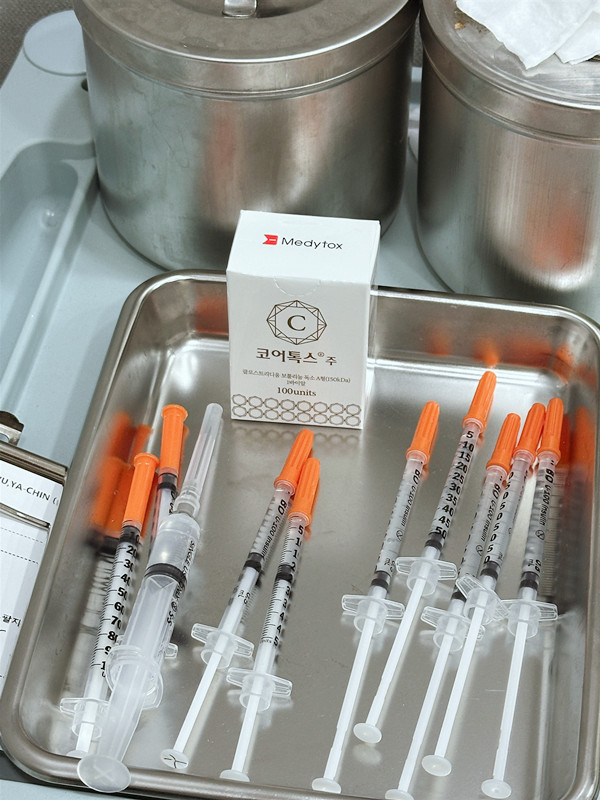
Don’t chase cheap deals at unlicensed or shady clinics. Korea has many anti-wrinkle brands; reputable clinics unwrap products in front of you to verify brands and batch numbers. If a clinic refuses to show packaging, walk away immediately.
Avoid lying down for 4 hours post-injection, and avoid strenuous exercise and alcohol for 24 hours. I saw these precautions during research but easily forgot—I couldn’t resist a beer on treatment day, resulting in a slightly swollen forehead that scared me.
FAQ
Q: Are Korean anti-wrinkle injections the same as Botox?
A: Yes. The main active ingredient is botulinum toxin. Common Korean brands include Meditoxin, Botulax, Nabota, etc., all working by blocking nerve signals to relax muscles and reduce dynamic lines. Different brands vary slightly in diffusion range and onset time, but the core mechanism is identical.
Q: Will my face feel frozen after injections?
A: It depends on dosage and injection placement. I received a natural dose; the doctor intentionally avoided heavy dosing, so my expressions remained completely normal with just slightly restricted forehead movement. Excessive dosing or misplaced points cause stiffness, making doctor experience crucial.
Q: Which areas are recommended for a first-timer?
A: Based on my experience, the most common combination is the forehead, glabella, and outer eye corners, as dynamic lines in these three zones age you the fastest. For beginners, starting here yields the clearest results with the lowest risk of mistakes.
Q: How soon do anti-wrinkle injections work, and how long do they last?
A: I personally noticed effects on day 5, with clear results by day 7. The doctor noted usual onset takes 3 to 7 days, peaking in two weeks. Longevity varies by individual, lasting roughly 4 to 6 months; my results remain very stable at 3 months.
Conclusion
Flying to Seoul for anti-wrinkle injections was one of my best decisions this year. Great results, reasonable pricing, and an easy process—the only mental preparation needed is waiting out those first few days for results to kick in. If dynamic lines bother you and you happen to want a trip to Korea, seriously consider scheduling it together.
Final reminder: Individual muscle structures and skin conditions vary; always consult a professional, qualified physician for personalized treatment plans. This article shares personal experiences only and does not constitute medical advice.