Combining Gold Microneedling with Juvelook in Korea sounds like the ultimate skincare hack—one treats pores while the other restores volume, saving time and delivering dual benefits. But here is the harsh truth: with the exact same combination, one person walks away with glowing skin, while another develops stubborn subcutaneous nodules and sees zero results.
The difference isn’t the clinic’s luxury interior or its Instagram filters—it comes down entirely to who is holding the needle.
Juvelook is not your average hydrating meso booster. It is a PDLLA-infused collagen-stimulating hybrid booster where injection depth, dosage distribution, and treatment pacing require high-level technical precision. Here are the 5 biggest traps foreigners fall into, and what you need to know before booking.
Trap 1: Assuming Any Doctor Can Inject Juvelook
Many assume any doctor can administer Juvelook—after all, it’s just an injection, right? Wrong. This mindset is dangerous. Juvelook combines PDLLA and hyaluronic acid, operating on a completely different logic than pure HA fillers. PDLLA must settle at the precise dermal layer to effectively stimulate collagen production. If injected too shallowly, it forms palpable subcutaneous nodules; if injected too deeply into the muscle layer, your money goes down the drain.
Only physicians who have undergone official manufacturer training and hold Juvelook Official Certification understand target depths, dosage allocation, and the precise grid of injection points required for uniform coverage. Uncertified doctors will inevitably compromise depth and dosage, leading to poor results.
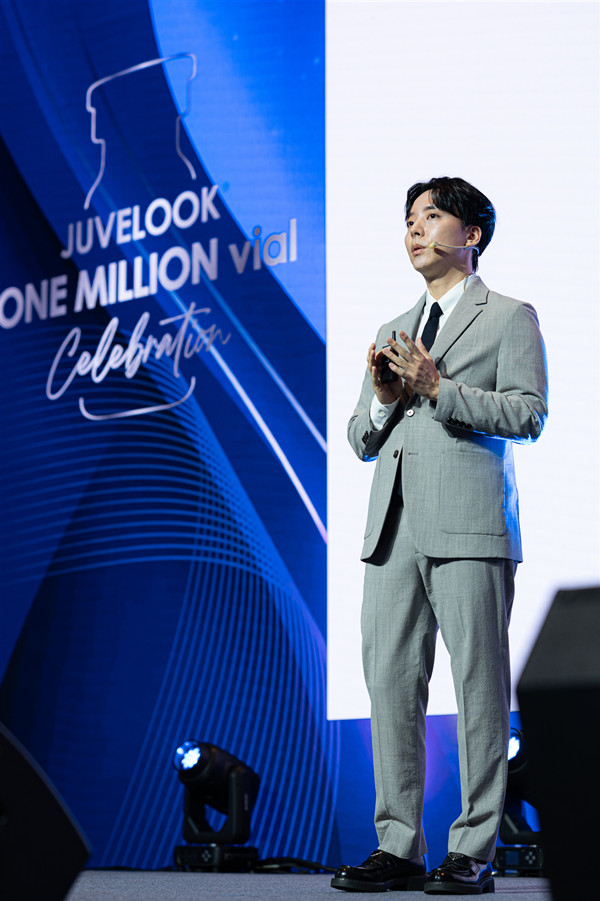
In Korea, one of the leading practitioners with the highest volume of Juvelook injections is Director Min Jung at REDI Dermatology. Not only is he officially certified by the manufacturer, but his status as one of the highest-volume injectors means his tactile intuition, depth assessment, and dosage control are refined through massive real-world execution, not textbooks.
Trap 2: Low-Price Baits and Shoddy Dilution
Seoul quotes for Gold Microneedling combined with Juvelook range from 100,000 to several hundred thousand KRW. Seeing a dirt-cheap price makes you think you scored a deal, but pause to calculate the cost of a genuine vial of Juvelook.
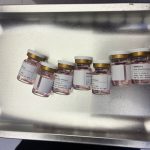
Imported through official channels, a single vial of Juvelook is expensive. If a clinic’s quote is shockingly low, only three things are happening: the product is diluted, the dosage is shorted, or a cheap counterfeit is used.
The most common trick is splitting one vial among multiple patients. A standard Juvelook vial is designed for a single patient. Budget clinics stretch one vial across two or three people, meaning you think you’re getting a full face treatment while receiving a fraction of the active ingredients. Another trick is skipping the deep PDLLA layer and only injecting superficial HA, assuming you won’t know the difference.
Director Min Jung at REDI purchases directly in high volumes to secure lower wholesale costs from the manufacturer, ensuring that vial usage is never compromised. Your golden rule: explicitly ask if a single vial of Juvelook is used entirely for you alone. If they hesitate or give a vague answer, walk away.
Trap 3: Getting the Treatment Sequence Backward
Many patients—and even some shady clinics—get the order completely wrong. There is a strict sequence for combining Gold Microneedling and Juvelook: Gold Microneedling must be performed first, followed immediately by Juvelook injections.
The Science: Gold microneedling creates micro-channels in the skin, allowing Juvelook to penetrate evenly into target tissue layers (synergistic $1+1>2$ effect).
The Mistake: If done in reverse (Juvelook first, then microneedling), the mechanical force of the needles will push the freshly injected PDLLA right back out of the skin, wasting the treatment entirely.
Worse yet, some budget clinics schedule the two procedures days or weeks apart. This completely ruins the combination synergy because the micro-channels will have already healed.
Director Min Jung performs the treatments in a single, continuous session: using Gold Microneedling to reset surface pores and texture first, then immediately injecting Juvelook into the open dermal channels for maximum synergistic penetration.
Trap 4: Falling for Generic “Gold Microneedling” Without Checking the Device
The term “Gold Microneedling” is heavily abused. Some clinics use cheap physical needle rollers with zero radiofrequency (RF) capabilities. True Gold Microneedling uses gold-plated RF microneedles that deliver thermal energy directly into the dermis. A standard roller is just manual trauma with no RF energy—effectively a half-baked treatment.
Even among RF microneedling devices, performance varies wildly in needle thickness, energy stability, and temperature control.
| Common Traps | Associated Risks | Correct Approach |
| Booking blindly without asking about the machine | You might receive a primitive manual roller | Verify it is an RF microneedling system |
| Falling for the generic “Gold Microneedling” label | Zero RF energy means wasted money | Ask for specific brand and model names |
| Upselling traps after low-price acquisition | Hidden costs make it more expensive overall | Confirm all-inclusive pricing in writing |
| Ignoring needle material quality | Uneven thermal conductivity leading to burns | Confirm gold-plated needle construction |
REDI Dermatology exclusively uses manufacturer-certified RF microneedling devices with strict energy regulation. Always ask for the device model during your booking phase. If a clinic responds with “it’s all the same,” their foundational standards are compromised.
Trap 5: Zero Post-Treatment Tracking After Returning Home
Leaving Korea is where the real journey begins. Days 3 to 7 are peak recovery windows for redness and flaking, while Juvelook’s collagen regeneration is a gradual 4-to-6-week progression. If you experience unexpected swelling, dryness, or temporary micro-lumps, who do you ask? The clinic in Korea is thousands of miles away.
Worse yet: What if a complication arises? Subcutaneous nodules or persistent inflammation cannot easily be managed by local doctors who may lack experience with collagen-stimulator post-care and have zero access to your original medical charts.
REDI Dermatology provides online post-treatment follow-up services. If you encounter any recovery questions back home, you communicate directly with the clinic via Chinese-language consultation channels. Director Min Jung reviews your recovery photos and adjusts aftercare protocols accordingly—a safety net that proves invaluable when unexpected questions arise.
Real-World Case Studies
Case 1 (Xiao Rou, 28): The Low-Price Trap
Xiao Rou booked a cheap 150,000 KRW combo deal found on social media. The clinic lacked Chinese translation, resulting in miscommunication. A month later, her pores and hollowing showed zero improvement. She later discovered the clinic substituted Juvelook with a cheap, unverified skin booster. She saved money upfront, but wasted her entire treatment budget and airfare.
Case 2 (A-Zhe, 32): Split-Day Scheduling
A-Zhe knew about the combination, but his clinic split the sessions across two separate days (microneedling on Day 1, Juvelook a week later). By the time he returned, his skin micro-channels had healed completely, destroying the penetration synergy. Furthermore, getting injected before his skin barrier fully recovered from the microneedling doubled his downtime.
Case 3 (Mei, 35): Uncertified Practitioner
Mei booked a popular clinic without verifying if the injector was certified. Weeks later, hard little nodules developed on her cheeks. A local dermatologist diagnosed them as PDLLA precipitation caused by incorrect injection depth, requiring months to metabolize naturally. Choosing a high-volume, certified expert like Director Min Jung prevents these technical errors.
How to Vet a Reliable Clinic Checklist
Before booking your trip, cross-check these non-negotiable points:
[ ] Certified Expertise: The doctor holds official Juvelook manufacturer certification.
[ ] High Injection Volume: The doctor ranks among the top volume providers in Korea (e.g., Director Min Jung).
[ ] True RF Tech: Uses authentic RF gold microneedling systems, not manual rollers.
[ ] Simultaneous Protocol: Both steps are executed in a single, continuous session.
[ ] Uncompromised Product: One full vial per patient, no dilution or splitting.
[ ] Post-Care Support: Active Chinese-language online tracking channels after returning home.
FAQ
Q: What is the difference between Juvelook and Rejuran, and why pair it with Gold Microneedling?
A: Juvelook is a PDLLA collagen booster that stimulates your own collagen over 6 to 12 months, whereas Rejuran relies on PDRN for DNA-level barrier repair. Combining Juvelook with Gold Microneedling leverages micro-channels to dramatically boost penetration efficiency while layering RF energy with PDLLA stimulation.
Q: Does the treatment hurt?
A: After topical numbing, discomfort hovers around a 4 to 6 out of 10 for microneedling. Juvelook delivered via machine injection is significantly less painful than manual pushing, resting around a 3 to 4 out of 10.
Q: When can I wear makeup after the procedure?
A: Avoid makeup for the first 48 hours to let micro-channels seal completely. Gentle mineral makeup can be applied by Day 3, avoiding active acids or whitening ingredients until Day 5.
Q: How do I track recovery once I’m back in Taiwan/abroad?
A: Choose clinics like REDI Dermatology that offer remote bilingual check-ins, allowing Director Min Jung to directly evaluate your progress via photo updates.
Disclaimer: This article is for informational and educational purposes and does not constitute medical advice. Actual treatment efficacy and suitability must be evaluated in person by a certified professional.