“I only had a few faint patches on my cheeks — after the laser, my whole face rebounded darker.” This sentence comes up almost daily in melasma communities. Melasma is the hardest pigment problem to treat: it involves [melanocyte activity, vascular factors, and the skin barrier] all at once, so the rule is not “stronger energy works better” but [get the parameters wrong and the pigment rebounds]. Below are the five traps most commonly repeated by people treating melasma in Korea.
Trap 1: Treating Melasma Like an Ordinary Spot
Freckles and sun spots are superficial pigment — one laser session usually produces visible change. Melasma is [active pigment] that often sits at the dermal-epidermal junction and comes with a vascular component.
Apply the spot-removal logic with high energy and it looks lighter at first, then spreads darker a week or two later — what is commonly called [rebound pigmentation]. The correct approach is pigment typing and skin assessment first, to determine whether the melasma is active or stable, before deciding energy and intervals.
Trap 2: Sessions Too Close Together, Too Much at Once
Many people want to “get it all done while I’m here,” so they schedule back-to-back sessions. But melasma needs time to recover — a gap of [3 to 4 weeks] between sessions is generally recommended.
Too short an interval keeps the skin in a state of repeated inflammation, and once the barrier is compromised, melanocytes become more active, not less. More sessions does not mean faster results.
Trap 3: Chasing the Pigment Without Sun Protection or Barrier Repair
Melasma is a [recurring] pigment condition — UV exposure, heat, and hormonal shifts all bring it back.
A common scenario: the treatment itself goes well, but sun protection after returning home is neglected, the pigment creeps back two or three months later, and the conclusion becomes “Korean aesthetic treatments don’t work.” The practical split is this: treatment suppresses the pigment, while sun protection and barrier repair keep it from bouncing back.
Trap 4: Comparing Prices Only, Without Checking If the Doctor Is a Dermatology Specialist
Low-price lead generation is common in Korea’s competitive aesthetic market. But melasma is a [medical pigment disorder] — it requires a board-certified dermatologist’s diagnostic ability, not a cheap single laser session. Use this table to screen a clinic quickly:
| Common Trap | Possible Consequence | Correct Approach |
|---|---|---|
| Choosing on lowest single-session price | Conservative energy, limited results | Confirm a complete treatment plan |
| Not asking who performs it | Handled by a non-specialist | Request a dermatology specialist |
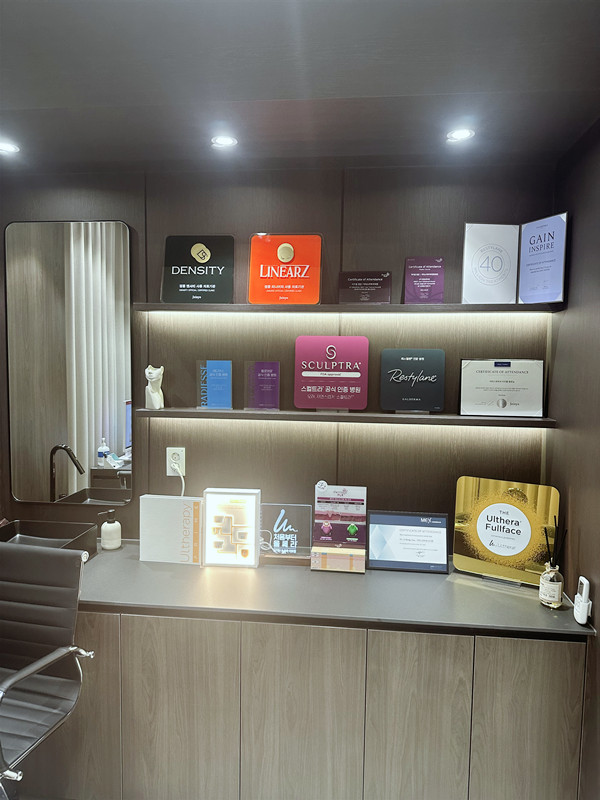
| Not verifying the device source | Non-original equipment used | Ask for original certification |
| No aftercare follow-up arranged | No recourse once you leave | Confirm an online follow-up channel |
Trap 5: Not Confirming What the Quote Actually Includes
Korean clinics typically quote per single item, but the real cost varies with [dosage, shot count, and treatment area]. Two quotes both labelled “skin booster” can differ by more than double between 1cc and 3cc.
Before you fly, ask the clinic for a written quote, and confirm the final amount before treatment begins. The reference ranges below reflect the Korean market and can help you judge whether a quote is reasonable (conversion basis: approximately ₩10,000 to NT$235):
| Treatment | Korea Reference (₩) | Approx. NT$ |
|---|---|---|
| Botulinum toxin (full-face wrinkles) | ₩30,000-80,000 | NT$ 700-1,900 |
| HA filler (1cc) | ₩150,000-400,000 | NT$ 3,500-9,400 |
| Skin booster (full face) | ₩200,000-500,000 | NT$ 4,700-11,800 |
| Contour injection | ₩100,000-300,000 | NT$ 2,300-7,000 |
| IPL pigment therapy (per session) | ₩100,000-250,000 | NT$ 2,300-5,900 |
| LDM ultrasound care (per session) | ₩80,000-150,000 | NT$ 1,900-3,500 |
| Ultrasound lifting (300 shots) | ₩800,000-1,500,000 | NT$ 18,800-35,000 |
| Thermage FLX (600 shots) | ₩2,000,000-3,500,000 | NT$ 47,000-82,000 |
A price noticeably below the bottom of the range usually means the dosage, shot count, or area has been trimmed. Ask directly how much dosage that price corresponds to.
Two Real Cautionary Cases
Case one: a woman in her thirties had high-energy laser treatment on melasma across both cheeks. It looked clearly lighter after a week, then began rebounding in week three, covering a wider area than before. At the follow-up she learned her melasma had been in an active phase, which high-energy treatment was never suitable for.
Case two: another traveller compared several clinics and picked the lowest quote, only to be told on site that the basic package covered a local area only and full-face treatment cost extra — the final total came to nearly double the original quote.
Pre-Departure Checklist
1. Confirm the treating physician holds [board certification in dermatology].
2. Confirm the device is an original certified model.
3. Confirm the dosage, shot count, and area included in the quote.
4. Confirm the session interval matches the skin’s recovery cycle.
5. Confirm the clinic offers Chinese-language consultation and online follow-up.
6. Confirm the clinic has a protocol for handling complications and a recovery space.
What a Clinic That Passes This Checklist Looks Like
Take Doctors Dermatology Clinic Dongdaemun in Dongdaemun-gu, Seoul. It meets several of the key criteria: [a board-certified dermatologist personally consults and performs treatment], [the same price for Korean and overseas patients] with a published price list, Chinese-language interpretation and online follow-up, a dedicated recovery room on site, and a location about a 5-minute walk from Exit 6 of Cheongnyangni Station. Its core treatments happen to be melasma, pigment blemishes, and fillers — the “assess the skin first, discuss treatment second” type.
Frequently Asked Questions
Q: If melasma darkens after laser treatment, is that a failure?
Not necessarily. Post-inflammatory hyperpigmentation is [one of the predictable responses] in melasma treatment and usually fades gradually over weeks to months. But if the darkened area keeps expanding, return for assessment promptly.
Q: Can melasma be cured in one session?
No. It is a chronic, recurring pigment condition requiring [multiple sessions plus long-term sun protection]. Aiming for stable control is more realistic.
Q: I only have three days — is that enough?
Single-session treatments such as pigment lasers, skin boosters, and botulinum toxin allow normal activity the same day, so a three-day trip is enough. Melasma, however, requires sessions spread over time, so a short trip is not suitable for intensive treatment.
Conclusion
Melasma is not solved by a single laser session — it tests [diagnosis, parameter control, and long-term maintenance]. The point of doing your homework is not to find the cheapest treatment, but to find a physician willing to assess your skin before discussing treatment. Work through the six-point checklist above and you will avoid most of the traps.
This article is for reference only. Treatment outcomes and risks vary from person to person; actual treatment should be based on assessment by a qualified medical professional.