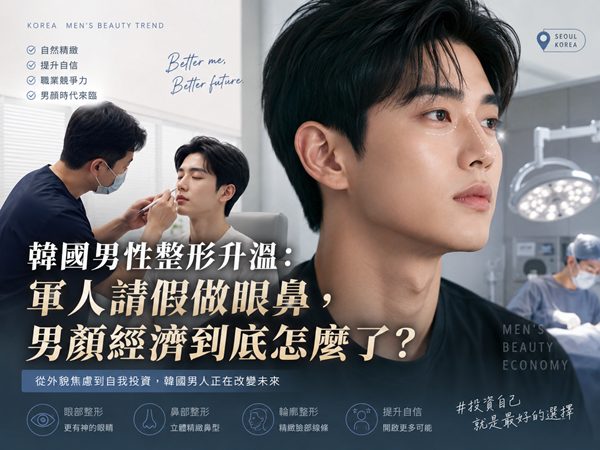
A recent trend in South Korea has sparked nationwide debate: active-duty soldiers are increasingly using their short leaves to undergo eyelid or nose surgery. This isn’t just a quirky news story; it is a clear reflection of the rapid growth of the male aesthetic market and a major shift in how Korean society views male grooming.
From “Hidden Secret” to “Mainstream Choice”
Over the past decade, the social stigma surrounding male plastic surgery in Korea has vanished. Public figures and idols have led the way, and today, university students and professionals openly pursue aesthetic enhancements. According to the Korean Society of Plastic and Reconstructive Surgeons, male procedures are growing by 12–15% annually, outpacing female growth. The goal is no longer to “become someone else,” but to look “more refreshed and defined.”
The “Soldier Aesthetic” Trend
The surge in military personnel getting surgery is being accelerated by strategic marketing.
Targeted Discounts: Some clinics offer military discounts of 10–30%, often bundling post-op care.
Time Management: For 19–22-year-olds, the military is a period of stability with few expenses. Many view surgery as a “discharge gift” to themselves.
Management Challenges: This trend has raised concerns regarding post-op recovery in high-intensity military environments. Eyelid surgery requires 7–14 days of recovery, while rhinoplasty stabilization takes at least 6 months. Balancing these with service demands remains a topic of debate.
The “Male Aesthetic” Market
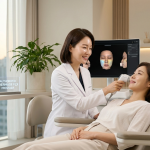
In response to this demand, top clinics in Seoul’s Gangnam district have launched “Male-Specific Consultation Rooms.” Design, consultation styles, and post-op care are now tailored to men:
Natural Eyelids: Focus on parallel or shallow arcs to avoid overly round, feminine eyes.
Conservative Rhinoplasty: Emphasizing straight bridges and facial proportion rather than feminine curves.
Jawline Sculpting: Strengthening the masculine frame.
Market Share: By 2025, male patients accounted for nearly 30% of the total aesthetic market, up from less than 10% a decade ago.
Guide for International Men Seeking Surgery in Korea
Korea offers surgeons with unrivaled experience in male facial sculpting, often at a more competitive price point than in Taiwan or Hong Kong.
| Procedure | Est. Korean Price (KRW) | Est. Price (TWD) |
| Double Eyelid | 0.8–1.5M | 20K–37K |
| Rhinoplasty | 3.5–7.0M | 87K–175K |
| Ptosis Correction | 1.2–2.5M | 30K–62K |
| Jaw Contouring | 4.0–8.0M | 100K–200K |
Note: Budget an additional 30,000–50,000 TWD for flights, lodging, and care.
Essential Tips
Communication: Ensure the clinic provides professional translation. Misunderstanding facial proportions can lead to dissatisfactory results.
Portfolio Matching: Only choose surgeons with an extensive portfolio of male patients. Do not let a clinic apply a female aesthetic template to your face.
Stay Time: For eyelid surgery, stay in Seoul for at least 5–7 days. Avoid flying immediately post-op.
Credentials: Verify that your surgeon holds a valid Korean Board Certification in Plastic Surgery.
FAQ
Is male surgery socially acceptable? Yes, especially among young people in Seoul. It is increasingly viewed as a career or social investment.
Can male eyelids look natural? Absolutely. The goal is to make eyes look “sharp” rather than “big.” Results are highly controllable.
What is the recovery impact? Expect 1–2 weeks of downtime. It is best to schedule surgery during periods with low social obligations.
Conclusion
The “Soldier Aesthetic” phenomenon is a window into a broader market transformation. Male aesthetic consumption in Korea has moved from a niche act to a mainstream lifestyle choice. For those considering a trip to Seoul, the market has never been more optimized for male needs—just ensure you prioritize board-certified expertise and allow sufficient time for recovery.